
P = p - i
The Formula for Performing Under Pressure

Pressure occurs when you are reminded that you will be judged and evaluated, that there is a degree of uncertainty about the outcome, that what you are about to do is very important, that you will be forced to be in competition in some form with others, and that you have specific expectations of how you want to perform. - The Brave Athlete
I step into the ring, gloves tight, mouthguard in, trying to look calm while my mind races. It’s just another sparring session.
But it doesn’t feel like one.
The guy across from me is a professional fighter. He’s been around. This isn’t a casual round. It’s a test … for me.
Who’s this new guy? Can he hang with the big boys?
He’s sizing me up. I’m doing the same — testing if his reputation’s earned.
The bell rings, and we start feeling each other out with light jabs, testing distance and reaction. Then he turns it up. A little faster. A little harder. I can feel the shift.
He comes in quick, disguises a heavy cross — but I see it coming. I throw a counter hook with a leg kick. It lands. Not perfect, but enough.
From there, it’s a fight. Intense enough that everything sharpens. My breathing. My focus. My awareness.
I know I’m being judged. By him. By the other coaches. By myself.
This isn’t just sparring - it’s an audition. Respect, pride, and opportunity are on the line, and I want to perform.
In that moment, I’m reminded of something from The Inner Game of Tennis by W. Timothy Gallwey.
P = p - i
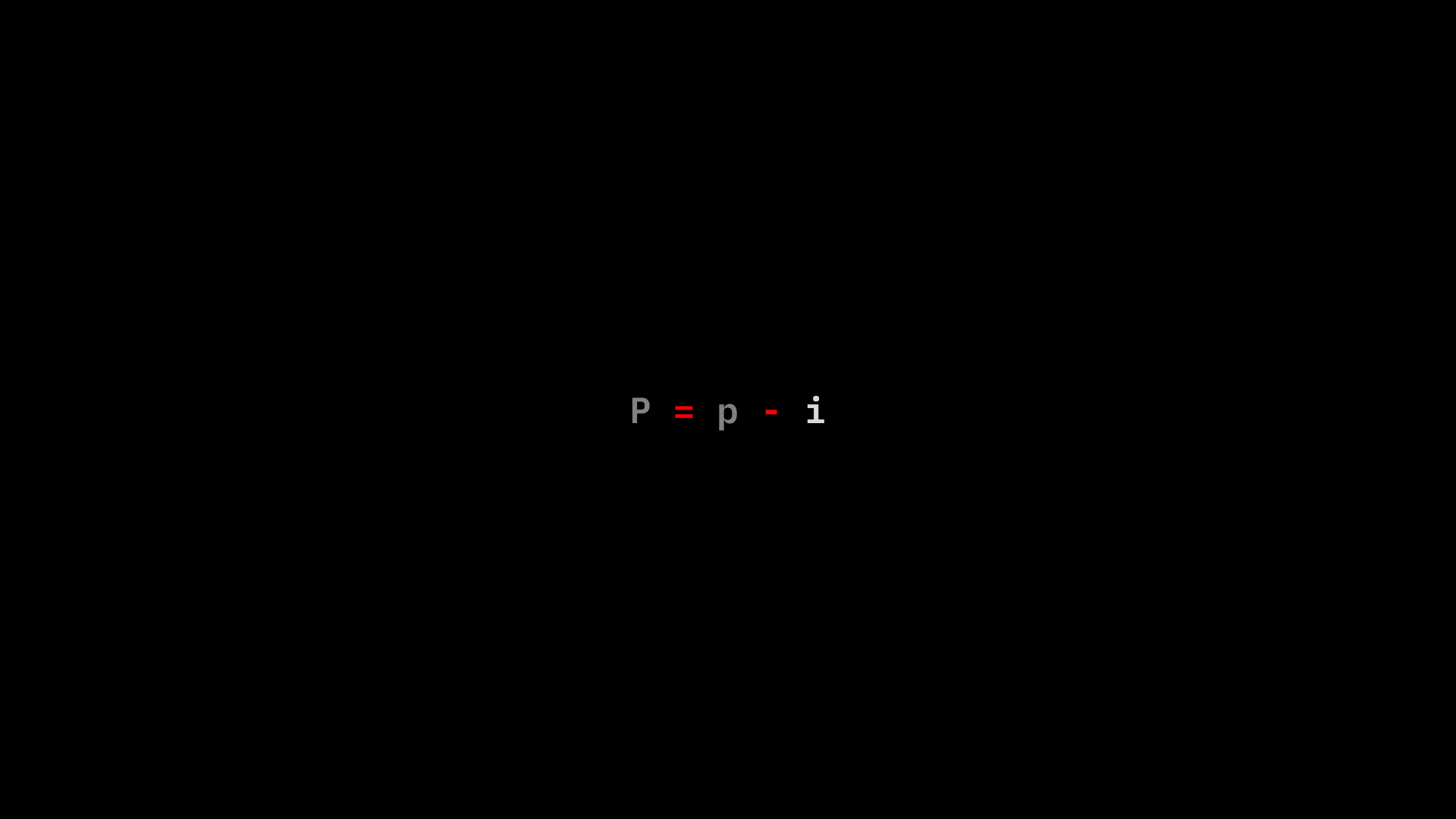
My biggest opponent that day wasn’t across from me — it was in my head. The nerves. The overthinking. The small voice that whispers, don’t mess this up.
P = p - i … Performance equals potential minus interference.
That’s the interference Gallwey talks about.
Gallwey argues we have two selves.
Self 1 is the critic: the conscious, controlling voice that wants perfection.
Self 2 is the doer: the part of you that’s trained, experienced, and knows what to do if you let it.
Most of the time, Self 1 tries to “help.” It shouts instructions mid-fight: keep your hands up, move your head, throw the jab! But that voice usually gets in the way.
The key isn’t to fight harder … it’s to quiet Self 1 so Self 2 can do its job.
When you’re prepared, you know what to do. But when pressure hits, Self 1 grabs the wheel — and performance drops.
Pressure doesn’t destroy potential. It exposes interference.
Using Fear as Focus
In the ring that day, I was scared. Not the kind of fear that freezes you - the kind that wakes you up.
Fear isn’t the enemy. It’s fuel for focus.
I could feel my heart pounding. My mind racing. But instead of trying to suppress it, I leaned in. Fear became focus.
When I stopped trying to look calm and just started fighting, everything slowed down. I wasn’t thinking, but responding.
It’s not about adding more effort. It’s about subtracting interference.
P = p - i isn’t just a clever line - it’s a map. The less you interfere, the closer your performance gets to your potential.
This applies in all aspects of life:
Stop overthinking during competition. The time to think was during training. When it’s go-time, trust what you’ve practiced. Let training take over.
As a manager, stop micromanaging or second-guessing every move your team makes.
Quiet the self-critical voice. The one that says you’re not ready, not smart enough, not experienced enough. Start doing, stop interfering.
When interference goes down, performance rises.
Practicing Pressure
You can’t outperform your mindset — but you can train it.
We all want to bring our best when it matters most. But you can’t wait for the “big moment” to practice handling pressure.
You have to build it into your routine. Put yourself in uncomfortable situations. Practice with eyes on you. Learn how to perform while being watched (even if it is imaginary).
That’s how you train Self 1 to stay quiet when it counts. Interference never disappears — but your relationship to it can evolve.
When you’ve practiced pressure, the big moment becomes just another moment.
As the round drew to a close, he planted his feet in the center of the ring — a challenge: move, and you lose. Neither one of us blinked. A 10-second brawl to see if you could give as much as you could take.
When the bell rang, he nodded, letting me know I passed. We hugged.
Respect.
I lost the round. But I proved something to him, the rest of the gym, and to myself.
I could hold my own.
That day, performance wasn’t about adding effort — it was about removing interference.
Pressure doesn’t change who you are. It just strips away everything you’re not. What’s left in that moment — that’s you at your most honest. Don’t interfere.